Aug 11,2026
What is logistics?The systematised flow of products from manufacturer to consumer. Now reverse the process—the product goes from the customer to the seller, then the warehouse and ends up in the recycling facility. This is the whole idea of reverse logistics. It is the need of the hour. Amidst a impending environmental crisis that call for even the most desperate measures, reverse logistics seems to be the perfect measure to keep the environment as healthy and thriving as possible.
Understanding Reverse Logistics Better
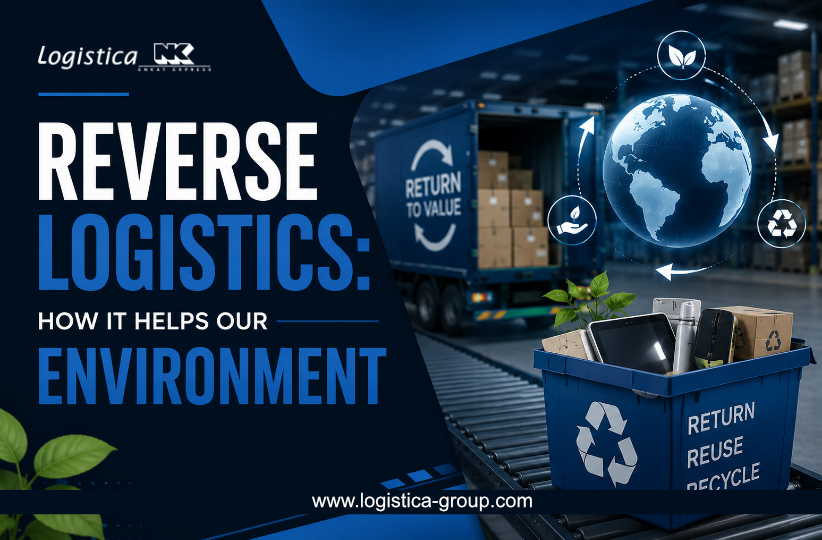
Reverse logistics is the usual delivery process reversed. When a standard logistics chain brings the product from manufacturer to consumer, reverse logistics takes the product from the consumer to recycling—that way, the manufacturing process comes full circle.
If you were to take a short run down of the reverse logistics process, it would cover factors such as:
- Customers returning products
- Collecting and recycling packaging materials
- Repairing or refurbishing used products for resale
- Safely disposing of hazardous waste
- Sending unsold stock back for redistribution
Reverse logistics offers products, materials and packaging a second chance instead of sending them straight back to the landfill.
The Environmental Aspect
The numbers clearly state it. If you look at the US, close to 5.8 billion pounds of landfill waste and 16 million tonnes of carbon dioxide were created by returned products.
But the manufacturing process to create the same products only causes one fifth of the global carbon emissions. Every item that is flown back to the recycling process minimises the material waste piling up.
Here's how reverse logistics actually makes a difference:
Less Waste in Landfills
When products are recycled instead of dumped after use, far less actually ends up in the landfill. Studies show that up to 40% of such products can be repaired and given a second life, rather than scrapped.
Lower Pollution from Manufacturing
Every recycled product means one less product requiring extraction or processing. Both cause enormous amounts of pollution.
Smarter Use of Resources
Forget environment—reverse logistics helps us extract value from returned goods and reduce the pressure to constantly produce new raw materials.
A Real Step Toward a Circular Economy
Reverse logistics sheds light on a better sustainable plan by reusing used products and keeping them in the manufacturer cycle.
Simple Steps That Add Up
Reverse logistics doesn't require complicated overhauls to make an environmental impact. Something as simple as consolidating return shipments, setting up convenient drop-off points instead of individual pickups, or reducing unnecessary returns can meaningfully cut down on fuel use and emissions.
Reverse logistics will show its full potential only when the world gives it the attention it needs. It can’t just stay a background process— it's a real opportunity to reduce waste, cut emissions, and use our resources more responsibly. As more businesses adopt it, it becomes one more way logistics can work for the planet, not just for the bottom line.Conclusion
At Logistica , we help businesses manage their full supply chain across Kuwait, Bahrain, and the UAE. Whether it's warehousing, distribution, or handling returns responsibly, we're here to make the process simple.